

『Fluke Air Flow Meter 922 Manual PDF: Troubleshooting Airflow Restrictions and Velocity Sizing』Related information(v cone flow meter|rotary gas meter|gallon meter|gear meter|metal tube rotameter|glass tube rotameter|nutating disk meter|transit time ultrasonic flow meter|wedge flow meter|pd meters|hydraulic flow meter|ultrasonic water flow meter|water flow meter|air flow meter|magnetic water flow meter|oxygen flow meter|gas flow meter|argon flow meter|air velocity meter|gasoline flow meter|fuel flow meter|ultrasonic water meter|digital water meter|nitrogen flow meter|solid flow meter|Oxygen tank flow meter|digital water flow meter|diesel fuel flow meter|steam flow meter|02 flow meter|compressed air flow meter|oil flow meter|liquid flow meter)
Fluke Air Flow Meter 922 Manual PDF: Troubleshooting Airflow Restrictions and Velocity Sizing
Quick Answer: Airflow restrictions show up as a rising pressure drop across filters, coils, dampers, and duct transitions. Measure static pressure and velocity with a Fluke 922 or verify with an inline gas flow meter. For permanent compressed air or process gas monitoring, send Silver Automation Instruments your gas type, pressure in bar, temperature in Celsius, pipe size in DN, and flow range in kg/h for a quoted solution.
What the Fluke 922 Manual PDF Covers
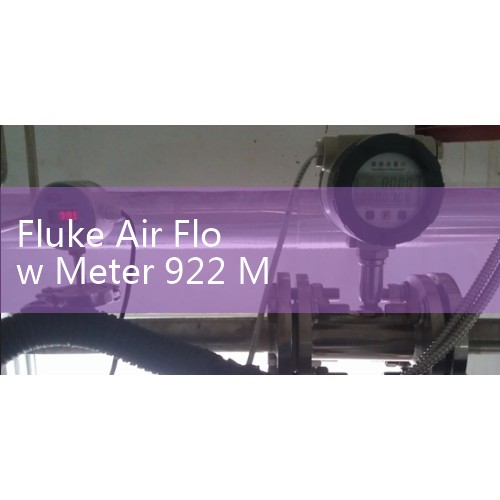
The Fluke 922 is a handheld differential pressure meter with pitot tube inputs. The meter reads pressure in Pa, inH2O, mmH2O, and velocity in m/s. The manual covers zeroing, tubing connection, duct traverse, and pressure mode setup. The Fluke Air Flow Meter 922 manual PDF treats troubleshooting airflow restrictions and velocity sizing as two linked tasks. The manual does not cover inline mass flow reading, gas composition correction, or continuous data logging for process lines. Many service engineers use this meter for spot checks. For permanent measurement, a thermal mass flow meter or a vortex flow meter from Silver Automation Instruments is usually a better match.
Common Airflow Restriction Patterns From Customer Sites
Filter loading is the most common restriction. A clean panel filter may drop 40 Pa. A loaded filter can drop 220 Pa or more. Check differential pressure across the filter bank. If the value doubles from the clean baseline, schedule replacement before the fan curve shifts. Cooling coils collect dust and moisture. Measure pressure before and after the coil. A rise above 150 Pa often means the coil face needs cleaning. Dampers can also close or drift. A closed fire damper in a branch duct will show as high static pressure at the inlet and low velocity at the diffuser.
Velocity Sizing Method Using Field Data
Take a duct traverse with the Fluke 922 pitot tube. Measure at 10 to 16 points across the cross section. Average the velocity readings. Multiply average velocity by duct area to get actual flow in m3/h. Compare this value with design flow. If actual flow is 15 percent below design at the same fan speed, there is a restriction or a duct leak. Do not size a flow meter based on pipe diameter alone. You need actual velocity at operating pressure and operating temperature. In practice, most engineers skip the second traverse on small ducts. That adds error. Take the extra two minutes. The data will match the real flow more closely.
When Spot Checks Are Not Enough
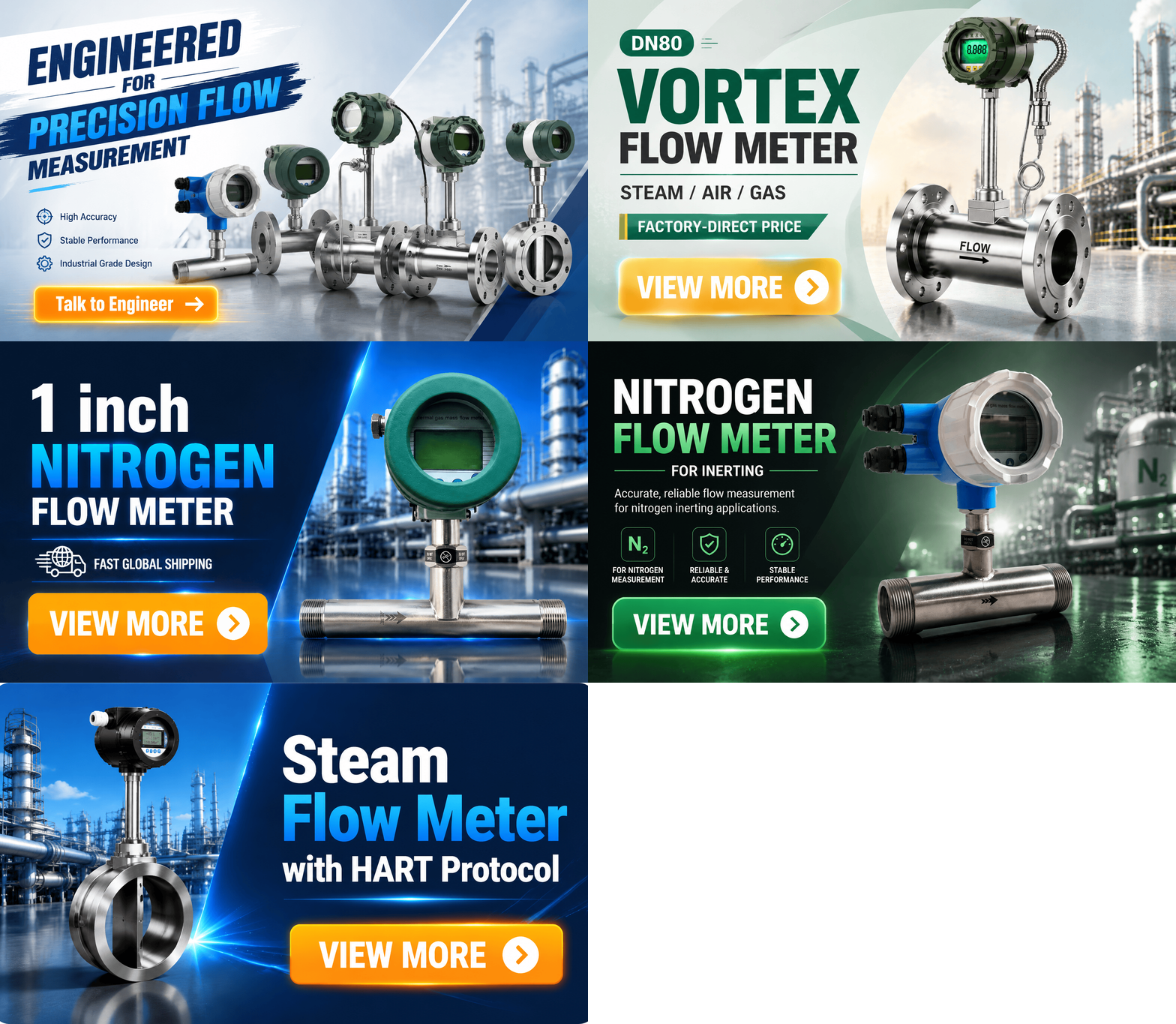
Handheld meters work for commissioning and troubleshooting. A spot check cannot send a 4-20 mA HART signal to SCADA. A spot check cannot log daily consumption. A spot check cannot correct for gas temperature or pressure changes. A thermal mass flow meter from Silver Automation Instruments inserts directly into the process line. The meter measures mass flow in kg/h or standard cubic meters per hour. The meter works on compressed air, nitrogen, biogas, and natural gas. For wet or conductive water flows, an electromagnetic flow meter is the standard pick.
_600x400.jpg) 3>Permanent Pressure Trending With Transmitters
3>Permanent Pressure Trending With Transmitters
Pair the manual Fluke 922 check with a permanent differential pressure transmitter. Silver Automation Instruments supplies transmitters with 4-20 mA output and optional HART. Install one across filters and one across the main supply header. A paperless recorder stores the trend. The operator sees a rising pressure drop before it affects production. This avoids sudden downtime in food and beverage plants or paint shops.
Industries Where We Have Seen This Setup
We supplied gas flow meters to a paint manufacturer in Southeast Asia for compressed air measurement. A desalination plant in the Middle East used electromagnetic flow meters on brine lines. A food grade dairy line in Australia used sanitary vortex flow meters for steam. Each application started with a simple velocity or pressure check. Then we sized the meter from actual operating data, not from pipe size alone. Last year a customer in Vietnam asked us to check a compressed air header reading. The Fluke 922 showed 18 m/s but the inline meter showed 11 m/s. The cause was a small leak around the pitot tube connection. After sealing the port, both readings matched.
Recommended Meter Pairing for Air and Gas
For compressed air and biogas, use a thermal mass flow meter. The insertion type mounts into DN25 to DN300 lines. For saturated steam in heating systems, use a vortex flow meter with temperature and pressure compensation. For liquid batching, use a Coriolis mass flow meter or oval gear flow meter. For conductive water and wastewater, use an electromagnetic flow meter. For large water lines that cannot be shut down, use a clamp-on ultrasonic flow meter.
Contact and Quote Details
For a fast quote, send your flow data to Silver Automation Instruments. Tel +86-25-68650347, WhatsApp +86-25-52155837, WeChat +86 15365082610. Our website is flow-meter.com.au
FAQ
Can the Fluke 922 measure airflow in a round duct?
Yes. Use two perpendicular traverses and take at least 10 velocity points. Average the readings before calculating flow.
What is the typical pressure drop across a clean air filter?
Clean panel filters often drop 25 to 75 Pa depending on face velocity. Final filters can drop 100 to 150 Pa when clean. Run the zero procedure before each test.
When should a plant switch from a handheld meter to an inline flow meter?
Switch when the process needs continuous signal output, totalized flow, alarms, or automatic control. A thermal mass flow meter gives 4-20 mA HART and RS485 Modbus outputs.
What information does Silver Automation Instruments need for a quote?
Send us your gas or liquid type, pressure in bar, temperature in Celsius, pipe size in DN, flow range in kg/h or m3/h, and required output signal. We reply with model, price, and lead time.
Does Silver Automation Instruments serve customers outside Australia?
Yes. We ship to Southeast Asia, Oceania, Latin America, Africa, and the Middle East. Contact us on Tel +86-25-68650347, WhatsApp +86-25-52155837, or WeChat +86 15365082610. Website flow-meter.com.au
 Hot Product
 Related AD