

『Fluenta Flow Meter Technology: Ultrasonic Flare Gas Measurement Systems for Petroleum Refineries』Related information(v cone flow meter|rotary gas meter|gallon meter|gear meter|metal tube rotameter|glass tube rotameter|nutating disk meter|transit time ultrasonic flow meter|wedge flow meter|pd meters|hydraulic flow meter|ultrasonic water flow meter|water flow meter|air flow meter|magnetic water flow meter|oxygen flow meter|gas flow meter|argon flow meter|air velocity meter|gasoline flow meter|fuel flow meter|ultrasonic water meter|digital water meter|nitrogen flow meter|solid flow meter|Oxygen tank flow meter|digital water flow meter|diesel fuel flow meter|steam flow meter|02 flow meter|compressed air flow meter|oil flow meter|liquid flow meter)
Ultrasonic Flare Gas Measurement Systems for Petroleum Refineries: Fluenta Flow Meter Technology and Supplier Selection
Quick Answer: Ultrasonic flare gas meters measure both low and high gas velocity without moving parts. Silver Instruments supplies inline and insertion models for refinery flare headers from DN50 to DN600. Send your gas composition, pipe size in DN, pressure in bar, temperature in degrees C, and flow range for model selection and price.
Why Flare Gas Flow Measurement Is a Reliability Problem
Refinery flare headers run near zero flow during normal operation and very high flow during a unit upset. This range defeats differential pressure meters and thermal mass meters. An ultrasonic meter reads gas velocity directly across the pipe. That direct reading gives a turndown ratio that mechanical meters cannot match.
We saw this on a customer site in Vietnam in 2023. A DN400 flare line ran at 0.2 m/s on most days and spiked to 38 m/s during a unit trip. The plant replaced a DP meter because it could not hold calibration below 2 m/s. The ultrasonic unit held stable readings across the full range.
How Fluenta Flow Meter Technology Works in Flare Gas
Fluenta flow meter technology follows the transit time principle. Two transducers send ultrasonic pulses upstream and downstream. The meter compares the time of flight. The difference in time gives gas velocity. Pressure and temperature inputs convert velocity to standard or normal volumetric flow.
This method has no moving parts. It does not need a bypass or a constant purge. Refineries prefer this because flare headers are safety systems. You cannot shut them down for routine meter cleaning.
Silver Instruments builds ultrasonic flare gas meters on the same measurement principle. We supply inline spool pieces for DN50 to DN300 and insertion probes for DN350 to DN600. Larger flare headers are available on request.
Meter Data and Outputs That Refinery Engineers Ask For
Our flare gas ultrasonic meters output 4-20 mA HART and Modbus RTU over RS485. The electronics can be integral or remote. Remote electronics help on tall flare stacks where direct access is difficult. The flow computer accepts a 4-20 mA pressure input and a PT100 temperature input.
Accuracy depends on gas composition and flow profile. In practice, a fully developed flow profile gives you plus or minus 1 to 2 percent of reading from 1 m/s to 60 m/s. Repeatability is plus or minus 0.2 percent. The output can be in m/s, Nm3/h, or kg/h depending on your refinery data system.
The sensor body uses 316L stainless steel for standard refinery gas. For sour gas service we offer Hastelloy C276 wetted parts. The meters are rated for ATEX Zone 1 and Zone 2. A common certificate is Ex db ia IIC T4 Ga/Gb. Ingress protection is IP65 or IP66.
Recommended Meter Configurations
For DN50 to DN300, we propose the inline model SIL-UGF-I. It has a 316L stainless steel spool body, PT100 input, and a 4-20 mA HART output. For DN350 to DN600, we propose the insertion model SIL-UGF-P. It mounts through a ball valve and suits hot tapping.
Most engineers skip this part. Flare gas lines often have poor flow profiles. A flow conditioner or a dual chord meter can compensate. We have supplied dual chord meters for DN500 and DN600 flare headers in the Middle East. The second chord helps when the velocity profile is asymmetric.
Installa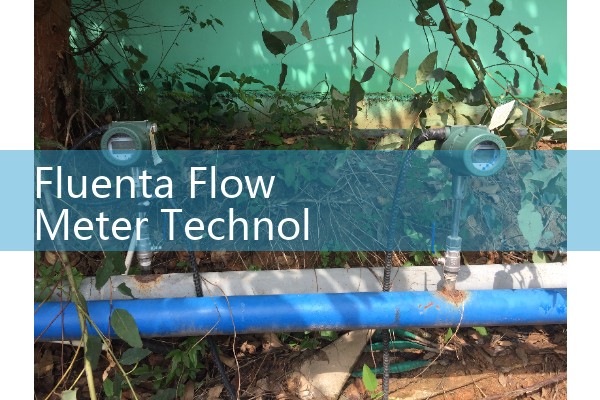
Install the meter with enough straight run. For an inline meter, use 10D upstream and 5D downstream when possible. For an insertion probe, locate the sensor at the pipe centerline or at the point recommended by the manufacturer. Avoid placing the meter immediately after an elbow or a knock-out drum outlet.
Flare gas lines often have wet gas, sour gas, or particles. DP meters plug impulse lines. Thermal meters drift when gas composition changes. Ultrasonic meters tolerate these conditions better. They measure through the gas phase and do not depend on a clean small bore line.
Why Refineries Choose Ultrasonic Over DP and Thermal Meters
Here is the thing. Flare gas composition is rarely stable. A refinery may send C1 to C4 hydrocarbons, hydrogen, nitrogen, and steam to the same header. Ultrasonic meters measure velocity first. The flow computer then uses molar mass or a live gas chromatograph input to calculate mass flow. The system stays flexible. If you change crude slates, you do not replace the meter. You update the gas composition table.
In regions with high ambient temperatures, such as the Middle East and Southeast Asia, remote electronics are common. The sensor stays on the pipe. The electronics sit in a cooler cabinet. That reduces drift and extends transmitter life.
Silver Instruments Scope for Refinery Flare Gas Metering
We are Silver Automation Instruments. Our flow meter website is flow-meter.com.au. We serve refineries and EPC contractors in Southeast Asia, Oceania, Latin America, Africa, and the Middle East. Our team supports model selection, installation review, and commissioning. We do not just ship a box. We check pipe size, gas composition, flow range, and hazardous area certification before quote.
Tel: +86-25-68650347
WhatsApp: +86-25-52155837
WeChat: +86 15365082610
FAQ
What is the typical accuracy of an ultrasonic flare gas flow meter?
In a fully developed flow profile, accuracy is plus or minus 1 to 2 percent of reading. For flare gas monitoring, repeatability is often more important than absolute accuracy.
Can ultrasonic flare gas meters handle very low flow during normal operation?
Yes. Ultrasonic meters can read velocities from 0.1 m/s. This is much better than a DP meter on a large flare header. The exact minimum depends on pipe diameter, gas pressure, and transducer frequency.
Do you supply ATEX Zone 1 flare gas meters for refineries?
Yes. We supply meters with ATEX Zone 1 and Zone 2 certification. Common marking is Ex db ia IIC T4 Ga/Gb. We also supply IECEx versions for projects outside Europe.
Which pipe sizes do you cover for refinery flare headers?
We cover DN50 to DN300 with inline spool piece meters. For DN350 to DN600 we offer insertion probes. For larger headers, we can do a custom mechanical design.
What information do you need to quote a flare gas flow meter?
Send us your pipe size in DN, gas composition or molar mass, pressure in bar, temperature in degrees C, flow range in kg/h or m/s, and hazardous area requirement. We will reply with model selection, accuracy estimate, price, and delivery time.
Send your flare gas meter inquiry to Silver Instruments today. Include pipe size, gas composition, pressure, temperature, and flow range. Our engineers will respond with a technical selection and a price quote.
 Hot News
 Related AD