

『Fti Turbine Flow Meter Calibration: Precision Fluid Viscosity Proving to ISO Standards』Related information(v cone flow meter|rotary gas meter|gallon meter|gear meter|metal tube rotameter|glass tube rotameter|nutating disk meter|transit time ultrasonic flow meter|wedge flow meter|pd meters|hydraulic flow meter|ultrasonic water flow meter|water flow meter|air flow meter|magnetic water flow meter|oxygen flow meter|gas flow meter|argon flow meter|air velocity meter|gasoline flow meter|fuel flow meter|ultrasonic water meter|digital water meter|nitrogen flow meter|solid flow meter|Oxygen tank flow meter|digital water flow meter|diesel fuel flow meter|steam flow meter|02 flow meter|compressed air flow meter|oil flow meter|liquid flow meter)

Fti Turbine Flow Meter Calibration: Precision Fluid Viscosity Proving to ISO Standards
Quick Answer: Silver Automation Instruments calibrates FTI turbine flow meters on ISO 17025 accredited benches with traceable master meters. We adjust meter factors across multiple viscosity ranges. You get a calibration certificate with uncertainty data for each test point.
Precision flow measurement fails when viscosity is ignored. A turbine flow meter that is accurate on water at 1 cP can shift by 2 percent to 5 percent on diesel at 5 cP or heavy oil at 30 cP. We see this on customer sites in Vietnam, Malaysia, and Chile. The problem is not the meter build quality. The problem is calibration data that does not match real process conditions.
Why ISO Calibration Matters for FTI Turbine Meters
ISO 17025 calibration forces a lab to control temperature, pressure, and traceability. Silver Instruments records oil temperature at the meter inlet and outlet. The calibration bench uses a positive displacement master meter with an expanded uncertainty of 0.05 percent. Each FTI turbine meter test run uses actual fluid, not water substitution.
Many low-cost calibration shops test with water only. That approach works for cold water service. It does not work for fuels, solvents, or edible oils. A Singapore based lubricant blender asked us to recalibrate three DN25 FTI turbine meters after a batch switch from SAE 10W to SAE 40 base oil. The original water calibration pushed the meter factor low. The corrected viscosity calibration brought total error back under 0.5 percent of reading.
Fluid Viscosity Proving and Meter Factor Shift
Turbine rotor speed depends on fluid velocity and drag. At 1 cP the velocity profile is stable and the rotor follows ideal linear output. At 10 cP or 20 cP the boundary layer thickens. Rotor slip changes. The K factor shifts, and the shift is not linear across flow rates.
Fluid viscosity proving means we map the meter factor at several viscosities. We test at 1 cP, 5 cP, 15 cP, and 30 cP or at your process viscosity. Each flow test repeats 5 times at 25 percent, 50 percent, 75 percent, and 100 percent of full range. We compute repeatability, linearity, and expanded uncertainty for each point. You receive a certificate that lists meter factor versus viscosity and flow rate.
Calibration Process at Silver Instruments
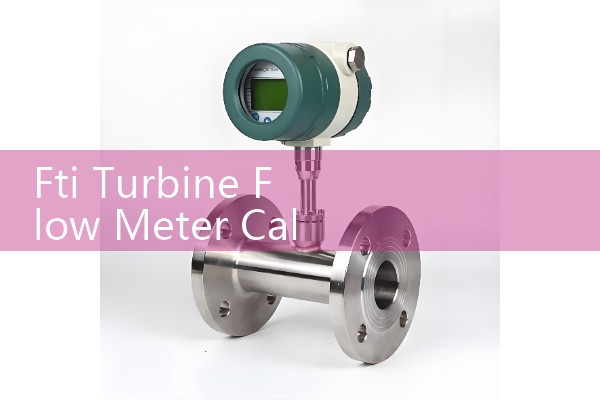
We accept FTI turbine flow meters from DN4 to DN300. The meter arrives at our Nanjing facility. We inspect rotor condition, bearing play, and pickup coil signal. We then flush the meter with the agreed test fluid.
Next we install the meter on our calibration rig. We control temperature within plus or minus 0.2 degrees Celsius. Flow rate is stable before data capture begins. Each test point collects 1000 pulses minimum. The system compares the raw frequency to the master meter volume. The software calculates a new meter factor and stores every reading. No manual transcription errors.
After calibration we issue an ISO 17025 certificate in PDF and printed format. The certificate shows traceability to NIST or CNAS depending on your regul
When to Recalibrate a Turbine Flow Meter
Bearings wear. Rotor blades collect deposits. Pickup coils lose sensitivity. Recalibration intervals depend on service. We recommend 12 months for custody transfer. A fuel terminal in Saudi Arabia follows a 6 month cycle because customs audits require fresh certificates. A paint manufacturer in Indonesia recalibrates every 9 months because solvent viscosity changes between batches.
Here is the thing. If your process changes from light diesel to biodiesel or from mineral oil to synthetic oil, recalibrate before the next production run. Viscosity differences of 2 cP are enough to shift the meter factor beyond 0.5 percent. Most engineers skip this part and then spend weeks chasing batch volume errors.
Recommended FTI Meter Models and Data Needed
Silver Instruments commonly calibrates FTI turbine meters paired with pulse output or 4-20 mA HART transmitters. We handle turndown ratios up to 10 to 1 for liquid service. For high viscosity above 30 cP we may recommend a positive displacement meter or a Coriolis mass flow meter as a master reference. But for clean hydrocarbons up to 30 cP, the FTI turbine meter is stable and repeatable after viscosity proving.
The FTI turbine flow meter calibration service follows the same ISO 17025 structure for every test. For a quote, send us your pipe size such as DN25 or DN50, flow range in m3/h or L/min, fluid type, viscosity in cP at operating temperature, temperature in degrees Celsius, pressure in bar, and output signal type. That data lets us confirm the bench fluid and the master meter range.
FAQ
Q: What ISO standard applies to turbine flow meter calibration?
A: We operate under ISO 17025 for laboratory competence. We also follow ISO 7066 uncertainty methods for flow measurement devices. Certificates list traceability references and expanded uncertainty.
Q: Does viscosity affect FTI turbine meter accuracy?
A: Yes. Higher viscosity changes rotor slip and velocity profile. We prove the meter factor at your actual viscosity range. The certificate gives you a correction table for different fluids.
Q: Can you calibrate FTI meters for water and oil on the same bench?
A: Yes. We flush the rig between fluids. We use separate master meters for low viscosity and high viscosity ranges to prevent cross contamination.
Q: How long does calibration take?
A: Typical turnaround is 5 to 7 working days after meter arrival. Express service is 3 days for DN15 to DN80 meters. We will confirm after inspection.
Q: What information do you need for a quote?
A: Send us pipe size, flow range, fluid type, viscosity at operating temperature, temperature, pressure, and signal output. We will reply with price, lead time, and calibration fluid recommendation.
Contact Silver Automation Instruments. Call +86-25-68650347 or WhatsApp +86-25-52155837. WeChat number is +86 15365082610. Send us your viscosity in cP, pipe size DN, flow range, and process temperature. We will recommend the right calibration plan.
 Hot News
 Related AD