

『Flow Meter Calibration Methods Comparison: Gravimetric, Volumetric, and Master Meter Proving』Related information(v cone flow meter|rotary gas meter|gallon meter|gear meter|metal tube rotameter|glass tube rotameter|nutating disk meter|transit time ultrasonic flow meter|wedge flow meter|pd meters|hydraulic flow meter|ultrasonic water flow meter|water flow meter|air flow meter|magnetic water flow meter|oxygen flow meter|gas flow meter|argon flow meter|air velocity meter|gasoline flow meter|fuel flow meter|ultrasonic water meter|digital water meter|nitrogen flow meter|solid flow meter|Oxygen tank flow meter|digital water flow meter|diesel fuel flow meter|steam flow meter|02 flow meter|compressed air flow meter|oil flow meter|liquid flow meter)
Flow Meter Calibration Methods Comparison: Gravimetric, Volumetric, and Master Meter Proving
Quick Answer: Gravimetric calibration gives the lowest uncertainty for mass flow meters, typically 0.02 percent to 0.05 percent of reading. Volumetric calibration is practical for volume-based meters with typical uncertainty from 0.05 percent to 0.2 percent. Master meter proving is a field ready comparison method with typical uncertainty from 0.1 percent to 0.5 percent depending on the master meter and process conditions.
Flow meter calibration is not just a pass or fail test. It links the meter output to a known reference. For industrial users, the method you choose changes capital cost, downtime, traceability, and measurement uncertainty.
Why Calibration Method Selection Matters for Industrial Flow Meters
Process plants buy flow meters for revenue and control. A gas distributor in Southeast Asia may use a Coriolis mass flow meter on a custody transfer skid. A water utility in Mexico may use electromagnetic flow meters on DN200 raw water lines. A chemical plant in Saudi Arabia may use oval gear flow meters on resin and solvent batching.
Each application has a different acceptance limit. For custody transfer, 0.1 percent uncertainty may be required. For internal batching, 0.5 percent may be enough. The calibration method must match the meter type, the fluid, and the uncertainty target.
In practice, many engineers skip calibration method details until an audit or a batch error appears. We have seen this on customer sites many times. A poorly proven volumetric rig can look acceptable but hide a 0.4 percent bias because of temperature corrections.
Gravimetric Calibration: Direct Mass Reference
Gravimetric calibration measures mass directly. A known mass of liquid is collected on a weigh scale while the meter under test measures flow. The reference mass is divided by time to get reference mass flow. Because the measurement is mass, it is the preferred method for Coriolis mass flow meters and thermal mass flow meters.
Typical lab uncertainty ranges from 0.02 percent to 0.05 percent of reading. A high accuracy rig at Silver Automation Instruments uses a precision weigh scale, a fast diverter valve, and a temperature controlled water loop. Water temperature is held at 20 to 22 °C. Pressure is kept between 2 and 6 bar. The liquid is collected for 30 seconds to 180 seconds depending on flow rate.
This method supports flow ranges from 0.1 kg/h to 100,000 kg/h. It covers DN15 to DN300 meter sizes in our calibration program. For Coriolis meters, gravimetric calibration gives direct mass traceability with no density correction step. That removes one source of error that volume based systems carry.
Cost is higher than a simple volumetric test because the weigh scale and diverter system need regular verification. The method is also sensitive to evaporation, splashing, and scale drift. Clean water is the usual fluid. For oily or viscous products, we use a closed collection system and a low vapor pressure carrier fluid.
Volumetric Calibration: Liquid Volume Reference
Volumetric calibration is common for electromagnetic flow meters, vortex flow meters, oval gear flow meters, and turbine flow meters. The meter under test is compared to a known volume. A piston prover, a calibrated tank, or a standard volume tube provides the reference.
Typical uncertainty runs from 0.05 percent to 0.2 percent of reading. The best labs reach 0.05 percent. Field volumetric rigs often run 0.1 percent to 0.25 percent. A lot depends on temperature measurement. Water expands by about 0.02 percent per degree Celsius near 20 °C. If the reference tank temperature and the meter temperature differ by 2 °C, you can introduce more than 0.04 percent bias without knowing it.
Volumetric calibration fits clean water, treated water, and low viscosity liquids. A water authority in the Philippines recently asked us about DN150 electromagnetic flow meters for a desalination plant discharge line. They needed calibration under 0.2 percent. A volumetric rig with PT100 temperature sensors and 4-20 mA HART pressure transmitters was enough.
For diesel, palm oil, or light chemical service, positive displacement meters like oval gear flow meters respond well to volumetric calibration. We recommend a calibrated positive displacement master meter or a piston prover. For viscous media above 50 cP, volumetric proving can be tricky because drain time and film thickness affect the reference volume.
Master Meter Proving: Field Ready Comparison
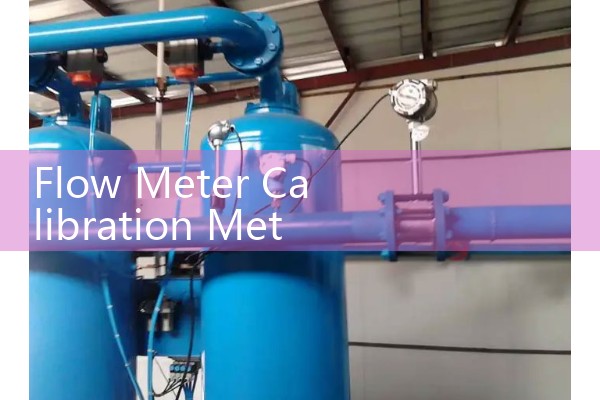
Master meter proving compares the meter under test to a calibrated reference meter installed in series with the same process fluid. The master meter can be a Coriolis mass flow meter, a positive displacement meter, or an ultrasonic meter with a valid calibration certificate. The test meter and master meter see the same flow at the same time. This method is popular for field calibration because it avoids removing the process meter and avoids interrupting the line for a long period.
Typical field uncertainty f
Last year a customer in Vietnam asked us to help with oval gear flow meters on a solvent blending line. The meters were installed after a control valve with limited straight run. We used a DN25 Coriolis master meter in series and ran a three point check at 10 percent, 50 percent, and 90 percent of flow range. The test showed a 0.35 percent deviation at low flow, which matched the gear meter slip curve. They adjusted the batching setpoint and reduced solvent waste by about 0.2 percent.
Master meter proving works well for natural gas, compressed air, diesel, fuel oil, and process water. It is not ideal for abrasive slurry or fluids with large density changes. For thermal mass flow meters on compressed air, a portable master thermal mass meter can be used, but the uncertainty is usually 0.5 percent to 1.0 percent because of temperature and pressure compensation.
Side by Side Comparison and Typical Accuracy
Here is the thing. No single method wins for every flow meter. The best method depends on the meter type, the fluid, the flow range, and the required uncertainty.
Gravimetric calibration is the best choice for Coriolis mass flow meters and any meter that needs mass traceability. It has the lowest uncertainty but higher cost and lab time. Volumetric calibration is the most practical for electromagnetic, vortex, oval gear, and turbine meters in water and light chemical service. It balances cost and accuracy. Master meter proving is the best field method when you cannot remove the meter or you need in-line verification.
Typical accuracy bands look like this. Gravimetric: 0.02 to 0.05 percent. Volumetric: 0.05 to 0.2 percent. Master meter proving: 0.1 to 0.5 percent. For thermal mass flow meters on gas, expect 0.5 to 1.0 percent unless the master meter and test meter are both corrected to mass flow with temperature and pressure compensation.
Which Calibration Method Should You Choose for Your Application
For a DN15 to DN50 Coriolis mass flow meter on a chemical batching skid, choose gravimetric calibration. The mass reference gives direct traceability to national standards and avoids density errors. Our lab program covers this with a 5 point calibration at 5 percent, 25 percent, 50 percent, 75 percent, and 100 percent of flow range.
For DN80 to DN300 electromagnetic flow meters in water and wastewater, choose volumetric calibration. The meter output is volume based. A volumetric rig with a PT100 temperature sensor and a pressure transmitter is straightforward and cost effective.
For oval gear, turbine, or positive displacement meters on viscous oil, fuel, or solvents, master meter proving is a strong field option. Use a Coriolis master meter with a valid calibration certificate. Run at least three flow points. Compare the pulse outputs over a repeatable batch volume.
For compressed air thermal mass flow meters, use master meter proving with a calibrated thermal mass meter or a high accuracy Coriolis gas meter. The uncertainty will be higher. Document the inlet pressure and gas temperature. Pressure compensated readings are important. A difference of 0.1 bar can change air density by more than 0.1 percent.
Calibration Services from Silver Automation Instruments
Silver Automation Instruments supplies Coriolis mass flow meters, electromagnetic flow meters, ultrasonic flow meters, vortex flow meters, oval gear flow meters, thermal mass flow meters, pressure transmitters, and paperless recorders. We also provide calibration support for flow meters from DN3 to DN300.
Our calibration partners use ISO/IEC 17025 accredited rigs for gravimetric and volumetric methods. We help with master meter proving on site across Southeast Asia, Oceania, Latin America, Africa, and the Middle East. We can recommend a master meter package and a step by step proving procedure.
Tell us your pressure (bar), temperature (°C), pipe size (DN), and flow range. We will recommend a calibration method and flow meter model with current pricing.
Contact Silver Automation Instruments:
Tel: +86-25-68650347
WhatsApp: +86-25-52155837
WeChat: +86 15365082610
Website: flow-meter.com.au
FAQ
What is the most accurate flow meter calibration method?
Gravimetric calibration is the most accurate for mass flow meters. It typically achieves 0.02 percent to 0.05 percent of reading uncertainty.
Can master meter proving replace ISO 17025 laboratory calibration?
Master meter proving is good for field verification. For custody transfer or ISO 17025 certificates, a laboratory gravimetric or volumetric calibration is still recommended.
Which method is best for electromagnetic flow meters?『SILVER Official Website SERVICE』
 Hot Blog
 Related AD